Post traumatic Stress Disorder, 2015, Beyond Blue Lt, retrieved 20th March 2015 < http://www.beyondblue.org.au/the-facts/anxiety/types-of-anxiety/ptsd >
Physiological Signals of PTSD, 2015, DARPA, retrieved 20th March 2015 < w.darpa.mil/Our_Work/I2O/Programs Detection_and_Computational_Analysis_of_Psychological_Signals_(DCAPS).aspx
>
Post-Traumatic Stress Disorder (PTSD), 2015, Helpguide.org, retrieved 20th March 2015 < http://www.helpguide.org/articles/ptsd-trauma/post-traumatic-stress-disorder.htm >
The global burden of cholera, 2015, World Health Organisation, retrieved 20th March 2015 < http://www.who.int/bulletin/volumes/90/3/11-093427/en/ >
Cholera - symptoms, treatment and prevention, 2014, SA Health, retrieved 20th March 2015 < http://www.sahealth.sa.gov.au/wps/wcm/connect/Public+Content/SA+Health+Internet/Health+topics/Health+conditions+prevention+and+treatment/Infectious+diseases/Cholera/ >
Cholera, 2015, World Health Organisation, retrieved 20th March 2015 < http://www.who.int/mediacentre/factsheets/fs107/en/ >
Cholera, 2014, KIDSHEALTH.org, retrieved 20th March 2015 < http://kidshealth.org/parent/infections/stomach/cholera.html >
Stool Analysis, 2015, WEBMD, retrieved 21st March 2015 < http://www.webmd.com/digestive-disorders/stool-analysis >
PTSD Occurrence image, 2015, Traumaline, retrieved 21st March 2015 < http://www.traumaline1.com/sites/default/files/PTSD%20occur.jpg >
Rubbish in river causes Cholera image, 2015, ABC News, retrieved 21st March 2015 < http://www.nature.com/news/2011/111018/images/hait460.jpg >
PTSD brain image, 2015, TJ blog, retrieved 21st March 2015 < http://thejointblog.com/wp-content/uploads/2014/09/ptsd.jpg >
Sunday, 22 March 2015

PTSD Question 9
9.
 Human health as a value of contemporary society can influence the focus of scientific research referring to the disease of Post-traumatic stress disorder (PTSD). To have a stable human health means to have a healthy physical and mental lifestyle. This means that people who have experienced war, like veterans, are most likely to have PTSD and are mentally unstable. Therefore, as a helpful community who cares about human health, we put our focus in how we can help those who are suffering not only from PTSD. Over 31,000 people committed suicide after being diagnosed with PTSD and that statistic is what influences our focus to the people who suffer with mental illness and how we can prevent PTSD.
By guiding our scientific research in PTSD means we are helping millions of people who are going through or have been through a mentally unstable time in their lives. About 20 out of every 100 Veterans have PTSD in a given year, creating an unhealthy mental lifestyle due to the traumatic events that occur in war. By focusing on this disorder we can help the veterans overcome this disease, and improving the quality of life. We are also improving the health of individuals when finishing serving our country and risking their own lives to help keep our country safe.
However, putting our focus in just one of the hundreds of mental illness means that the amount of people suffering from other mental disease will sky rocket. For example depression has affected millions of people and is the main cause of millions of suicidal deaths. In just one year, there were approximately 41,149 reported suicide deaths caused by depression. In relation to the non-infectious disease PTSD that only 31,000 people committed suicide in one year. This shows that we should be focusing on more suicidal mental diseases that cause human health to be at risk and research how to cure and help the individuals.
Human health does influence our focus in scientific research referring to the disease of PTSD. This statement is accurate in the thought of what we research is to help others who are in need of it, and people with mental illness such as PTSD need it. However, this is an unjust statement and we should be focusing on all diseases and especially the diseases that are killing majority of people in our society like depression and figure out how to cure all.
By guiding our scientific research in PTSD means we are helping millions of people who are going through or have been through a mentally unstable time in their lives. About 20 out of every 100 Veterans have PTSD in a given year, creating an unhealthy mental lifestyle due to the traumatic events that occur in war. By focusing on this disorder we can help the veterans overcome this disease, and improving the quality of life. We are also improving the health of individuals when finishing serving our country and risking their own lives to help keep our country safe.
However, putting our focus in just one of the hundreds of mental illness means that the amount of people suffering from other mental disease will sky rocket. For example depression has affected millions of people and is the main cause of millions of suicidal deaths. In just one year, there were approximately 41,149 reported suicide deaths caused by depression. In relation to the non-infectious disease PTSD that only 31,000 people committed suicide in one year. This shows that we should be focusing on more suicidal mental diseases that cause human health to be at risk and research how to cure and help the individuals.
Human health does influence our focus in scientific research referring to the disease of PTSD. This statement is accurate in the thought of what we research is to help others who are in need of it, and people with mental illness such as PTSD need it. However, this is an unjust statement and we should be focusing on all diseases and especially the diseases that are killing majority of people in our society like depression and figure out how to cure all.
PTSD Questions 1-8
1. PTSD
2. Post-traumatic stress disorder (PTSD) is a particular set of reactions that can develop in people who have they experienced an event which threatened their life or others around them. PTSD can occur when an event such as car or other serious accident has concurred or any physical or sexual assault, war, torture, or natural disasters such as bushfires or floods. About 25% of people who are exposed to traumatic events develop PTSD Which leads to feelings of excess fear, horror, anger, sadness and hopelessness are natural after events like these.
3.Early 1980’s a condition was added to the DSM-III which was named post-traumatic stress disorder (PTSD.) It was developed by the experiences and conditions of US military veterans of the war in Vietnam. It was said to say that after 35 days of uninterrupted combat, 98% of them exhibited psychiatric disturbances. Therefore creating the mental illness of PTSD.
Here is an article that talks about Australian soldiers need help as they are diagnosed with PTSD after returning from war.
4. Many factors revolve around the traumatic event itself. Traumatic events are more likely to cause PTSD when they involve a severe threat to your personal safety. The more extreme and prolonged the threat, the greater the risk of developing PTSD in return. Some general risk factors may include; history of physical or sexual abuse, history of depression, anxiety, or another mental illness, lack of support after the trauma, and a high level of stress everyday.
5. Someone who has experienced a traumatic event may sometimes feel that they have ‘got over’ it, until they are confronted with a reminder that triggers symptoms again. Some of these symptoms included; flashbacks of the traumatic event through intrusive memories or nightmares, sweating, panic attacks, avoiding situations that are reminders of the trauma, feeling anxious for no reason and a lack of concentration. These are just some signs of PTSD and they may vary on the event that has caused the trauma.
6.Treatment usually involves psychological therapy with the person directly affected by a qualified health professional such as a doctor or psychologist. The sooner someone is diagnosed and receives treatment, the more likely it is they will recover sooner. With help, a person can learn to manage their response in unavoidable situations that previously would have triggered a flashback. Medication can also be helpful for the individual. With appropriate treatment and support people with PTSD are able to make a full recovery.
7. Prevention of PTSD is a way to reduce the burden off the individual. One of the strategies to prevent this disease is through education about the medical aspects of PTSD. By educating the public, the percentage of people being diagnosed with PTSD will drop dramatically as they could prevent it through family support, psychotherapy, etc. Some medications have promised to lower the intense physiologic image and to prevent the brain from forming traumatic memories right after the event. This then contributes to the overall prevention of PTSD and help individuals overcome this disorder.
8. Computational Analysis of Psychological Signals (DCAPS) is a program that asses the psychological status of an individual. DCAPS analyses patterns of everyday behaviour and sects subtle changes that associate with PTSD. It provides honest sensory data from daily social interactions that help diagnose people with PTSD so they can get the treatment they need.

Cholera Question 9
9. Equality as a value of contemporary society can influence the focus of scientific research referring to the disease of Cholera. Equality is to promote the state of equal in status, rights and opportunities. This means that people who are in underdeveloped countries have less opportunities to access clean and safe water to drink as they have minimal resources. And did you know that every 20 seconds, a child dies from a water-related disease? That's equivalent to reading two sentences of this discussion. That statistic is what influences our focus to the helpless people of these undeveloped countries and research how we can help prevent the disease Cholera.
By pointing our focus in cholera means putting all our money and time into finding a way to eliminate it as a threat to our world and help these undeveloped countries. Over 120 000 people die of cholera each year and by finding a way to cure this disease, we can change that statistic to drop dramatically. This will then improve the quality of life for thousands around the world, to enjoy fresh and safe water to drink, rather than scavenging to find any water at all that may be contaminated.
However, putting our focus in one disease means brushing off the other life threatening diseases that are causing troubles to the individuals of our society. For example an infections disease like cancer is a well known illness that kills 7.6 million people each year. Compared to the disease Cholera that only 120 000 people from die each year. This proves that we should be focusing on more life threatening diseases like cancers, as more people statistically die from that disease each year. This is being unfair to the people who are dying from other diseases as no one is providing any way to cure to them.
Equality does influence our focus in scientific research referring to the disease of cholera. This statement is accurate in the thought of what we research is to help others who are in need of it, and undeveloped countries need significant help as they have minimal resources compared to us. However, this is an unjust statement and we should be focusing on all diseases and especially the diseases that are killing majority of people in our society.
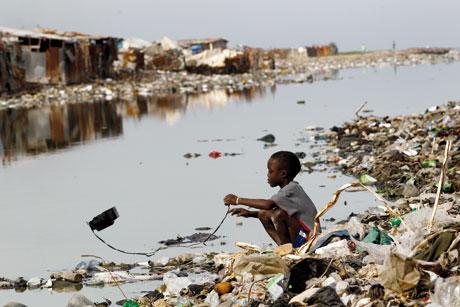
By pointing our focus in cholera means putting all our money and time into finding a way to eliminate it as a threat to our world and help these undeveloped countries. Over 120 000 people die of cholera each year and by finding a way to cure this disease, we can change that statistic to drop dramatically. This will then improve the quality of life for thousands around the world, to enjoy fresh and safe water to drink, rather than scavenging to find any water at all that may be contaminated.
However, putting our focus in one disease means brushing off the other life threatening diseases that are causing troubles to the individuals of our society. For example an infections disease like cancer is a well known illness that kills 7.6 million people each year. Compared to the disease Cholera that only 120 000 people from die each year. This proves that we should be focusing on more life threatening diseases like cancers, as more people statistically die from that disease each year. This is being unfair to the people who are dying from other diseases as no one is providing any way to cure to them.
Equality does influence our focus in scientific research referring to the disease of cholera. This statement is accurate in the thought of what we research is to help others who are in need of it, and undeveloped countries need significant help as they have minimal resources compared to us. However, this is an unjust statement and we should be focusing on all diseases and especially the diseases that are killing majority of people in our society.
Cholera Questions 1-8
1. Cholera
2. Cholera is a infection caused by ingestion of food or water contaminated with the bacterium Vibrio cholerae. This bacteria produces a toxin that binds to the walls of the intestines. The body responds by secreting large amounts of water, causing diarrhoea and vomiting. As a result, people with cholera can become dehydrated very quickly. Untreated severe dehydration can cause serious health problems like seizures and kidney failures. There are an estimated 3–5 million cholera cases and 100 000–120 000 deaths due to cholera every year, but with simple treatment full recovery can be expected.
3. During the 19th century, Cholera had a significant impact on the whole world by killing over millions of people across all continents. It originated from Ganga River in India where many people from around the world gathered to attended the festivals. People that attended the festivals frequently contracted the disease there and carried it back to other parts of continent on their returns, where it did spread. Therefore causing the first break out that affected the rest of the world.
4. The disease occurs when the bacteria is indigested by food or water contaminated by human faeces that is infected with the bacteria of Vibrio cholerae. This is one reason why cholera is rare in countries with good sanitation systems. Flush toilets, sewer systems, and water treatment facilities keep faeces out of the food and water. Cholera also sometimes can spread after a natural disaster, like a flood. If people are living in tents or other places without proper sanitation systems this can cause the water to be infected. Cholera is not contagious, so you can't catch it from direct contact with another person.
Here is an article that tells you about the contaminated berries causing Cholera and is an example of how it spreads.
5. When someone is infected with the cholera bacterium, symptoms can appear in a few hours or as 5 days later. Some of the symptoms include; diarrhoea, nausea and vomiting, cramps in the abdomen and legs, lack of energy, unusual sleepiness, dry mouth and extreme thirst, dry skin, low body fluids output and low blood pressure. About 75% of people infected with Vibrio cholerae do not develop any symptoms, although the bacteria are present in their faeces for 7–14 days after infection.
6. There are many different ways to treat Cholera and be cured of the disease. Replacing the lost fluids with water to stay hydrated is a key way to recover. Over 80% of people have been cured by Oral Rehydration Salts (ORS) as a supplement to clean water. Without rehydration, approximately half of the people that are infected with cholera die. Antibiotics can help with the diarrhoea side effect and also contribute to being dehydrated. Zinc supplements may shorten the duration of diarrhoea by over 50%
7. Raw foods carry the disease of Cholera, so cook food thoroughly and it it while its hot to prevent the disease. Fish is a major cause of Cholera and if not well-cooked it can carry the disease as well. Try not to mix cooked foods with raw foods like salads as it can contaminate the cooked food. Lastly, wash vegetables and fruit thoroughly in clean, treated water so no traces of the disease can be ingested. If one does not follow this procedure it can higher the chances of transmitting the disease.
8.A test that is performed on the individual to identify the disease cholera is called a stool analysis. For a stool analysis, a stool sample is collected in a clean container and then sent to the laboratory. Laboratory analysis includes microscopic examination, chemical tests, and microbiologic tests which all include forms of technology to analyse the sample. The stool will be checked for colour, consistency, amount, shape, odour, and the presence of mucus, this will then give the information to tell if they individual has Cholera.
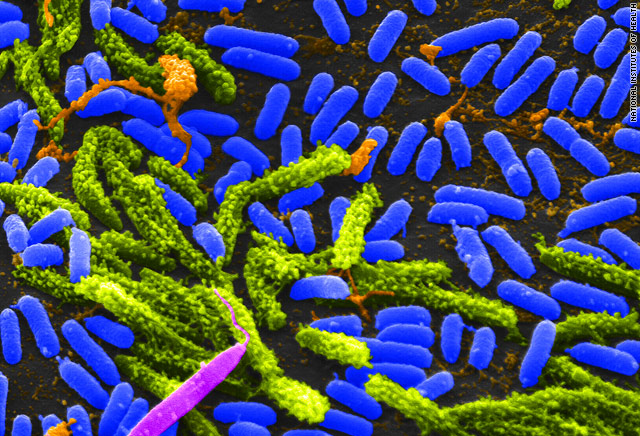
8.A test that is performed on the individual to identify the disease cholera is called a stool analysis. For a stool analysis, a stool sample is collected in a clean container and then sent to the laboratory. Laboratory analysis includes microscopic examination, chemical tests, and microbiologic tests which all include forms of technology to analyse the sample. The stool will be checked for colour, consistency, amount, shape, odour, and the presence of mucus, this will then give the information to tell if they individual has Cholera.
Subscribe to:
Posts (Atom)